Wisq

During the summer of 2024 I had the awesome opportunity to intern for for Wisq, a Bay Area startup that had raised over $40 million in funding, dedicated to providing AI-powered coaching for managers and employees. I got to work on many cool projects, and this was my favorite one!
The Challenge

During my internship at Wisq, I was tasked with an exciting challenge: How could we leverage OpenAI's new GPT-4o capabilities to provide unique value for our customers? With GPT-4o being known for its powerful language and vision processing, the potential was huge. But the big question was how do we turn these exciting capabilities into something truly valuable for our users?

My Solution

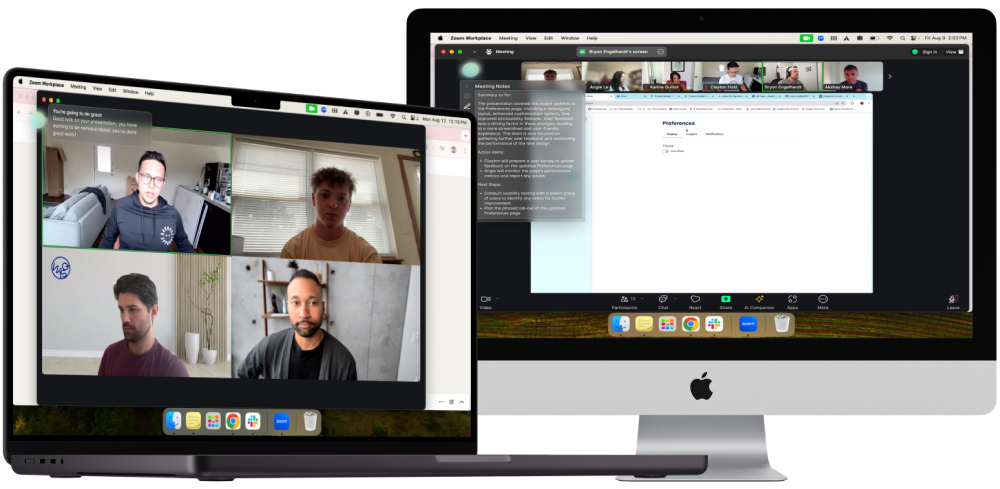
A virtual meeting coach equipped with Wisq's unique knowledge of it's users to offer real-time feedback, insights, recommendations, notes, and more.

My Goals

Create designs that effectively communicate value and align with stakeholder expectations
Develop innovative solutions that leverage Wisq’s core strengths and GPT-4o's unique capabilities

Project Timeline

July 2024 - August 2024
Discovery

Goal

Generate diverse ideas on how Wisq could leverage GPT-4o’s vision and language capabilities.

Approach

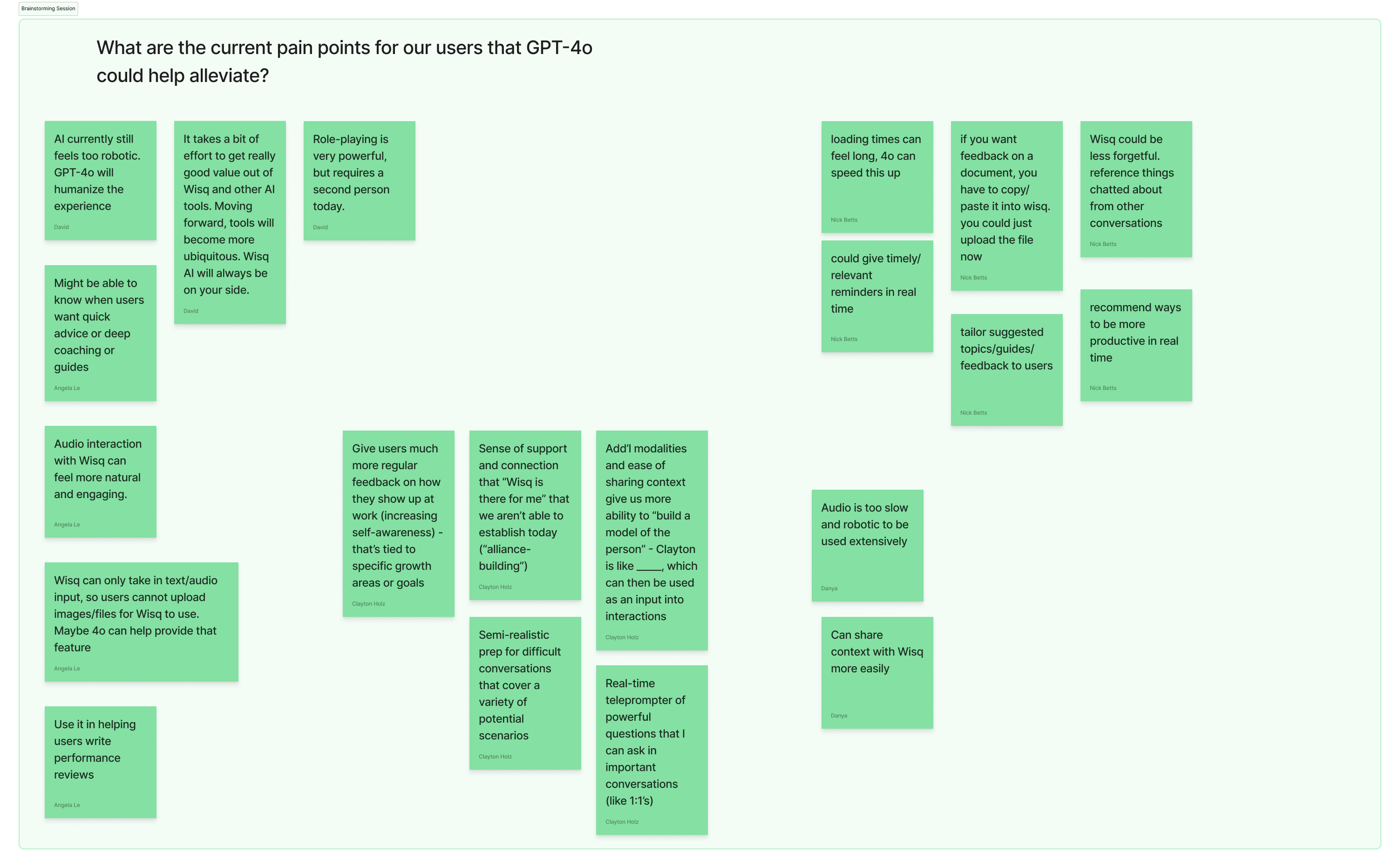
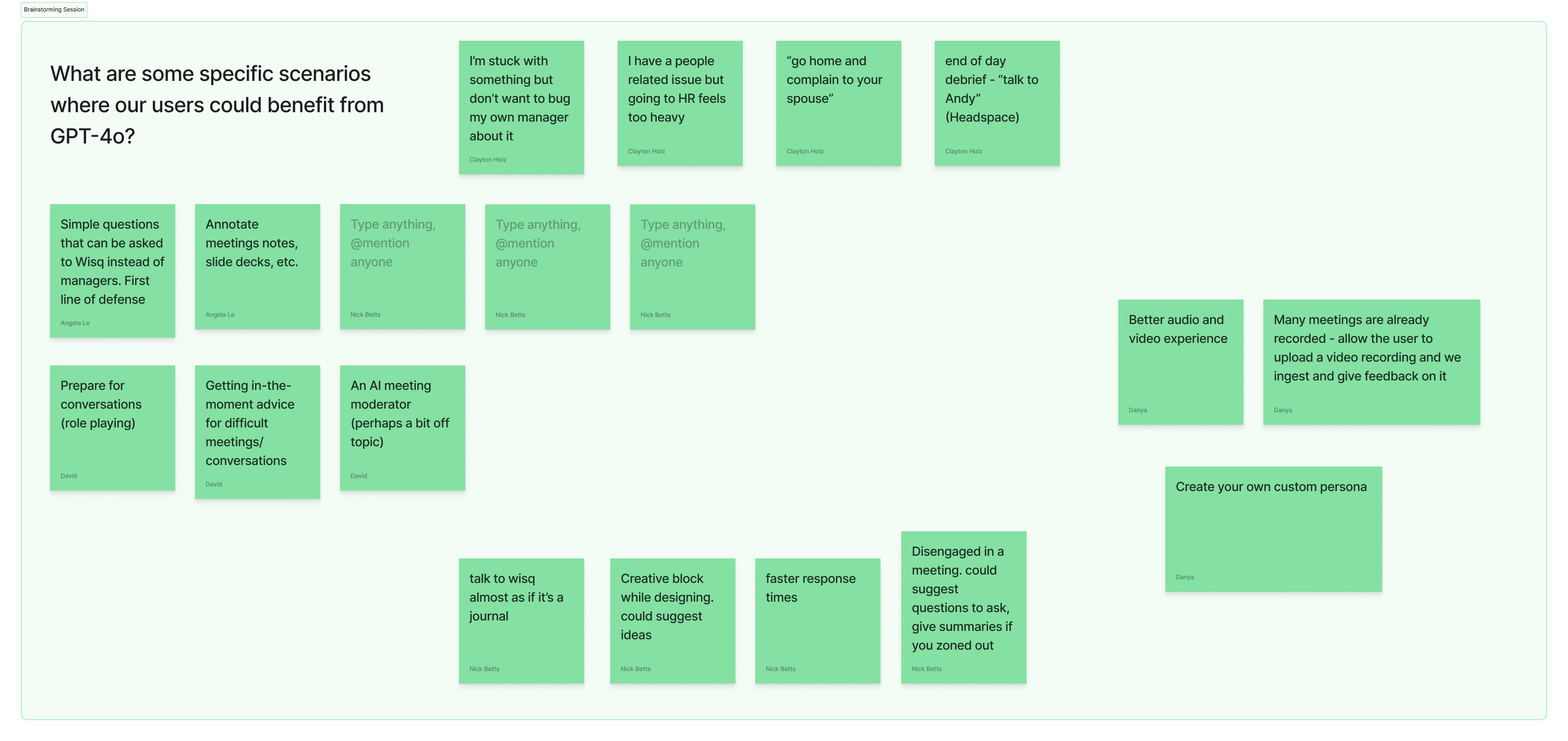
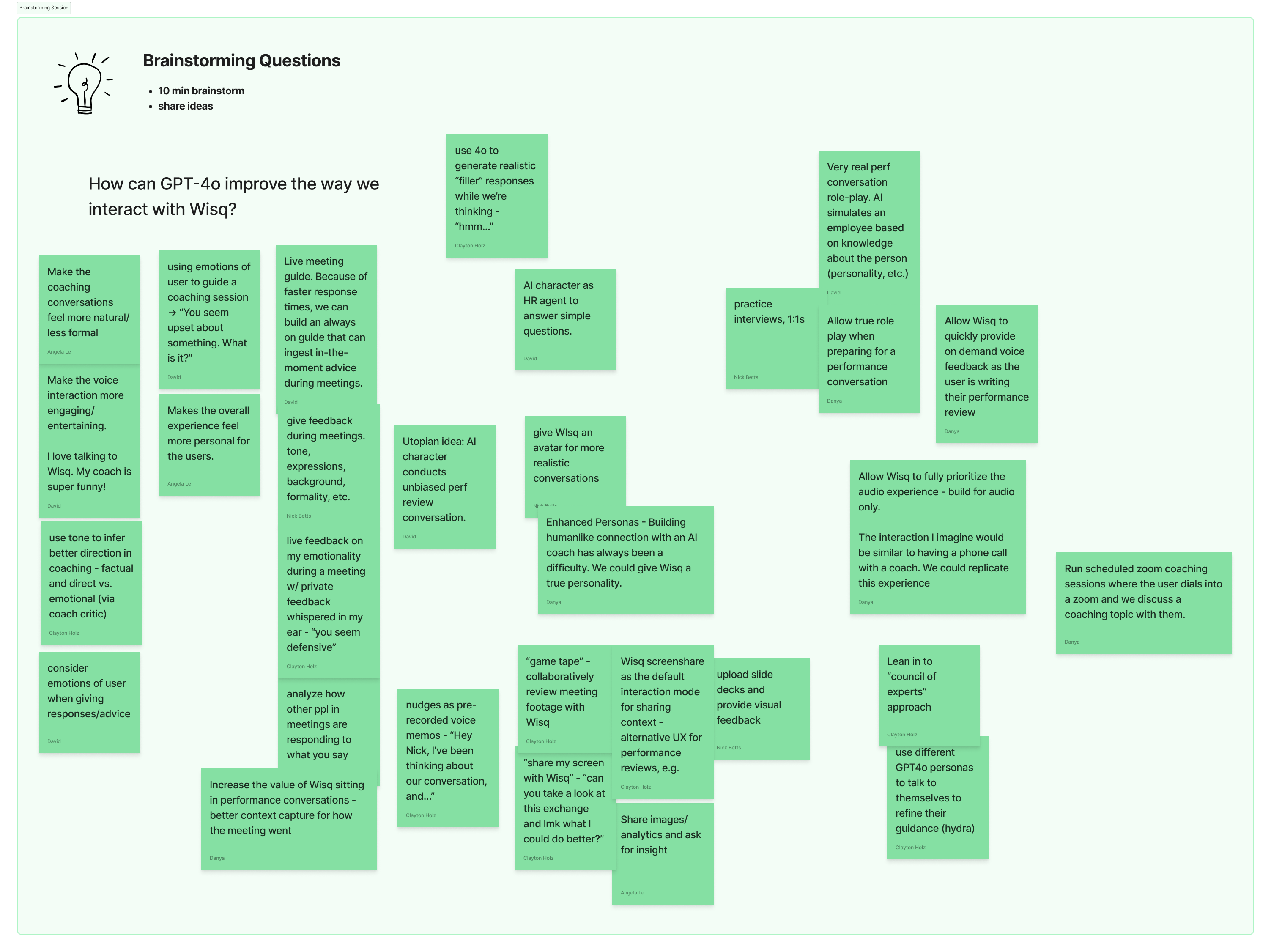
I facilitated a brainstorming session with members of my team at Wisq, first providing context by outlining GPT-4's new vision capabilities. I then guided the discussion with open-ended questions, encouraging the team to generate a wide range of diverse ideas.

Takeaways

The brainstorming session was highly successful, yielding a wide range of ideas for how Wisq could leverage GPT-4o’s capabilities. It provided a strong foundation for the project, as the participants were key stakeholders, ensuring early alignment and setting the stage for a collaborative process.

Goal

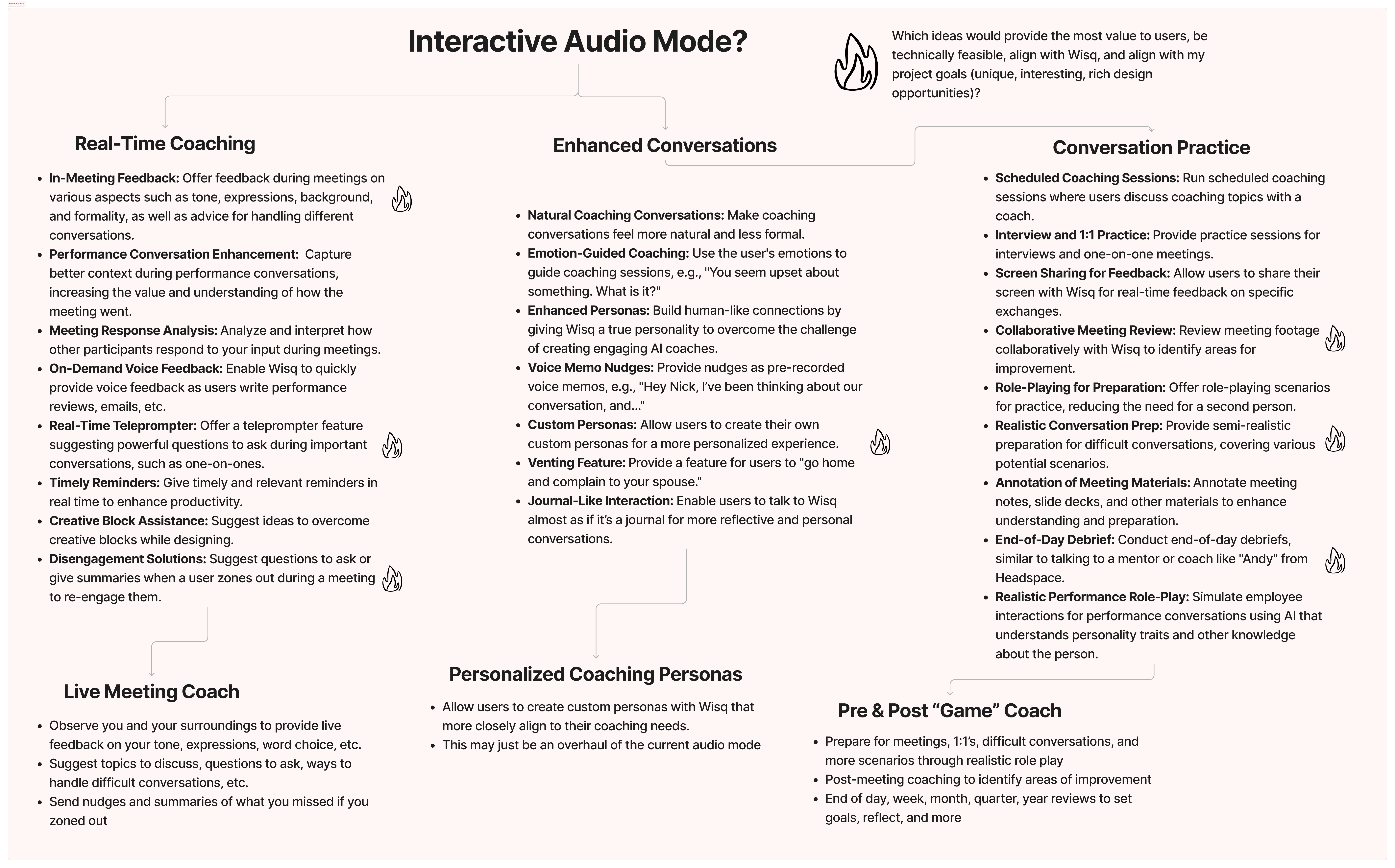
Analyze and synthesize the ideas from the brainstorming session, then refine and narrow them down to the most impactful solutions.

Approach

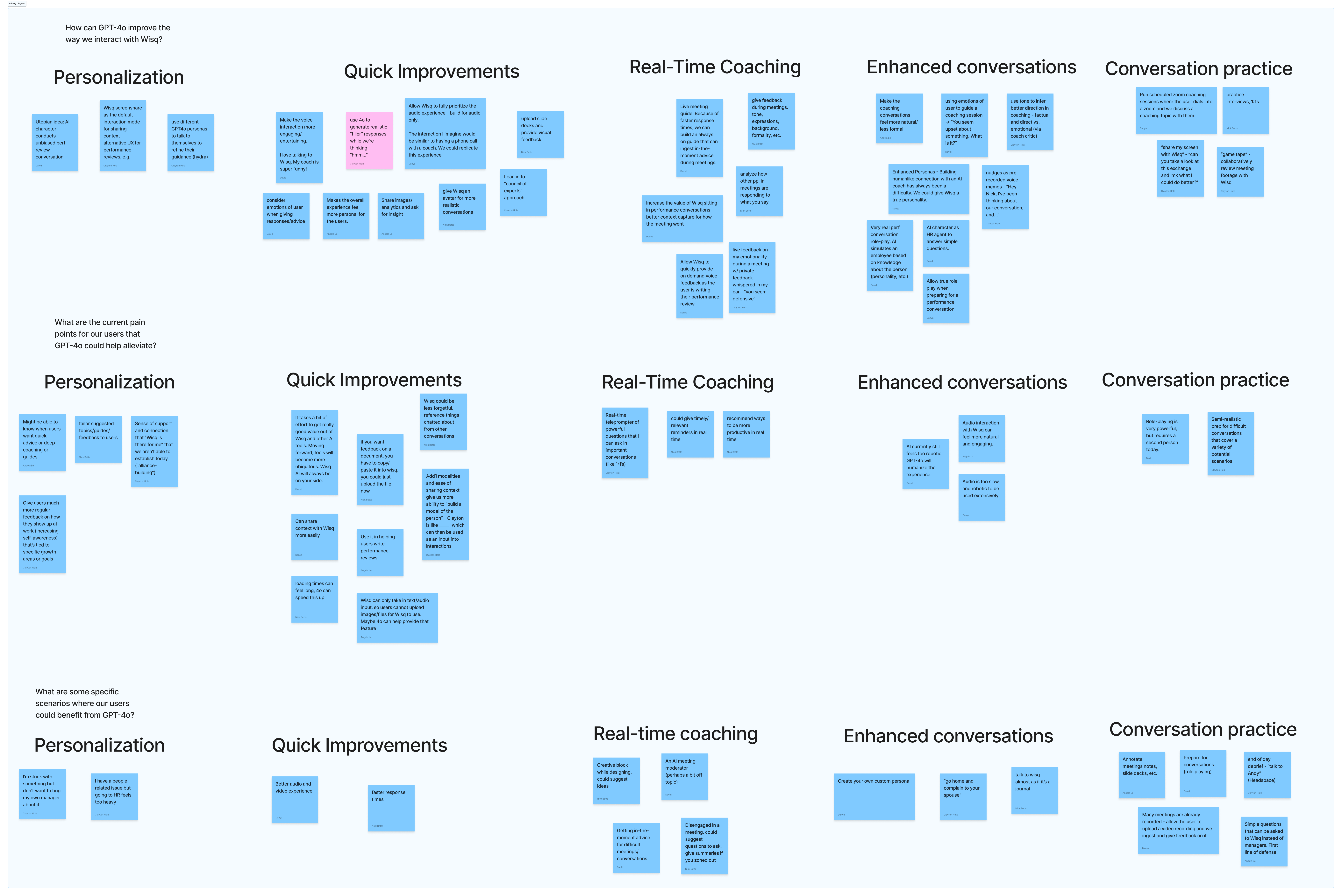
I organized all the ideas into five main categories using affinity diagramming, then prioritized three key areas for deeper exploration. From there, I expanded on the concepts within those categories and selected my top three to develop further.

Takeaways

There were countless ideas to sift through, making the process challenging but rewarding. In the end, I was satisfied with the three concepts I developed and felt ready to gather stakeholder feedback to determine the next steps.

Goal

Determine which idea stakeholders believed was the best to pursue, focusing on its uniqueness, alignment with Wisq's goals, and potential to deliver a strong, impactful project.

Approach

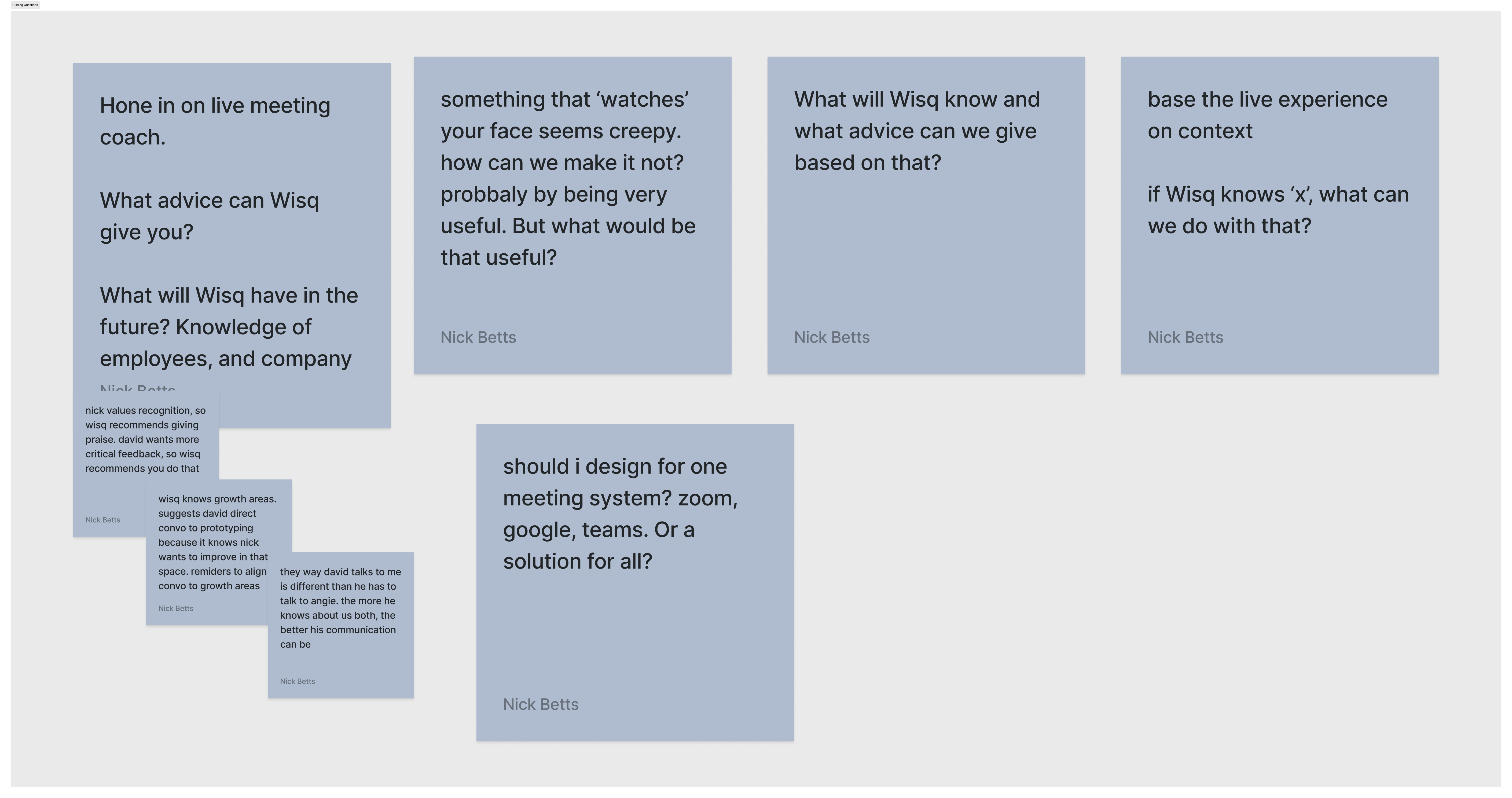
I presented my ideas to stakeholders and engaged in discussions to gather their insights on the best path forward. Together, we developed guiding questions to help shape and drive the project forward.

Takeaways

We chose to move forward with the real-time virtual meeting coach, recognizing that it aligned well with the insights Wisq would have about its users. Since this was a future-focused project, we assumed that once GPT-4o's capabilities were fully available, Wisq would have extensive knowledge of users through performance reviews. This data could be leveraged to offer personalized suggestions and feedback during meetings, enhancing the user experience.

Crafting the Experience

Goal

Identify the pain points points and opportunities throughout the entire virtual meeting process.

Approach

I outlined five key stages of the virtual meeting process, from pre-meeting to post-meeting, and analyzed each stage to identify pain points and opportunities for improvement.

Takeaways

I recognized that covering the entire meeting process might be too ambitious given the time constraints, so I decided to focus solely on the in-meeting experience. There were plenty of valuable opportunities within this stage, and I felt confident moving forward with that focus.

Goal

Generate a range of live feedback options Wisq could provide during meetings.

Approach

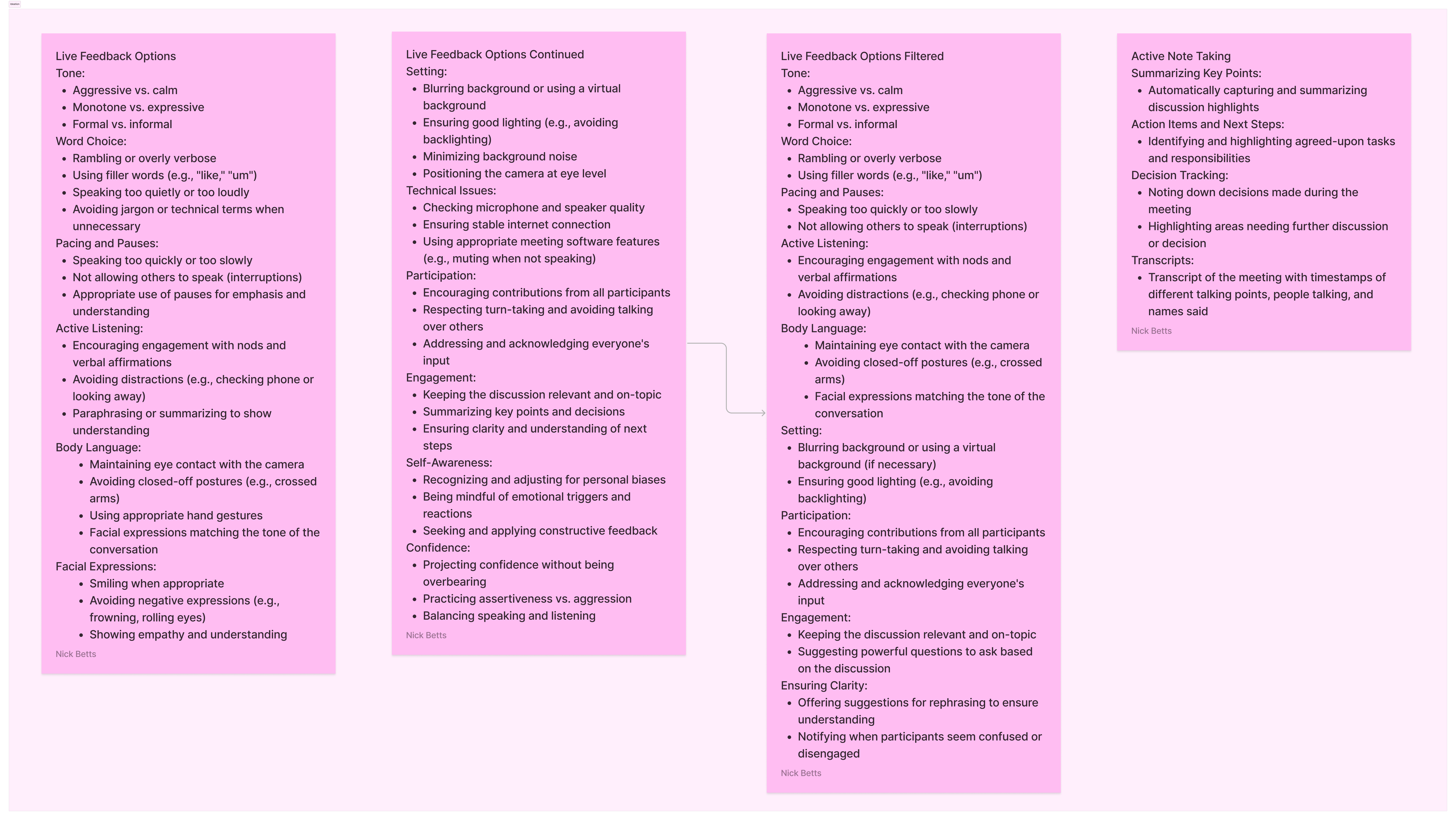
I leveraged the pain points and opportunities identified from the journey mapping activity to brainstorm a wide range of ideas, including potential live feedback options and additional features like real-time note-taking.

Takeaways

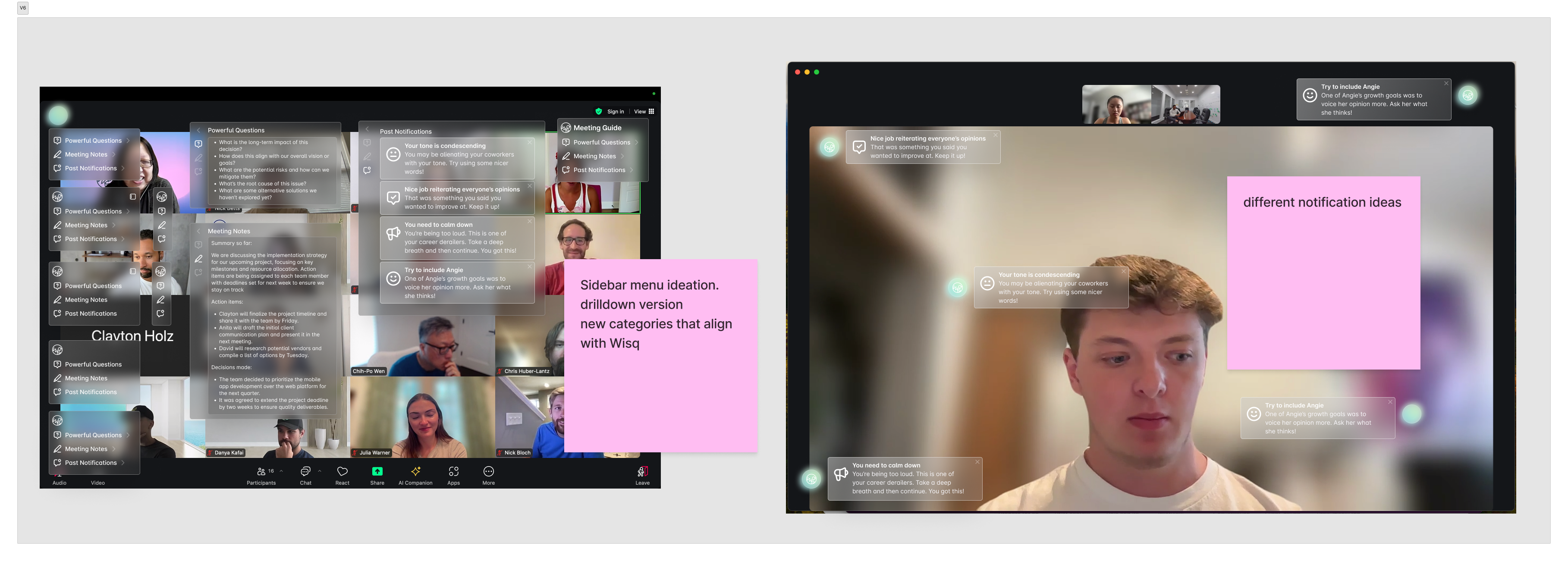
I organized the feedback into distinct categories, which allowed me to generate more specific ideas, such as notifying users when their tone becomes too aggressive, alerting them if they overuse filler words like 'like' or 'um,' and suggesting powerful questions to ask during the meeting.

Goal

finally get some ideas onto paper to start getting into the design phase of the project

Approach

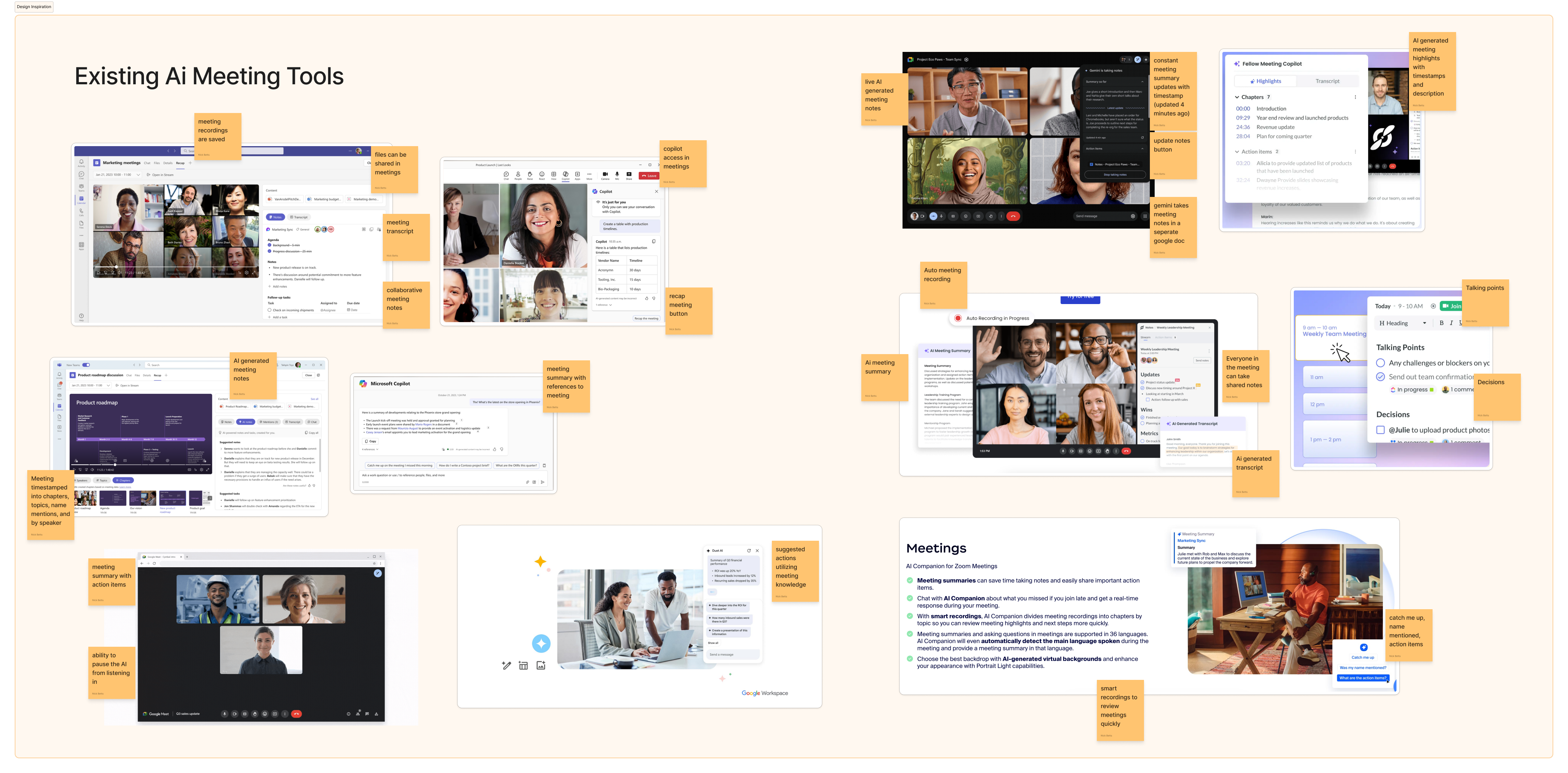
I conducted a competitive analysis of existing AI meeting tools to understand their features and functionalities. This gave me a solid foundation to base my sketches on and helped identify opportunities to differentiate Wisq's solution.

Takeaways

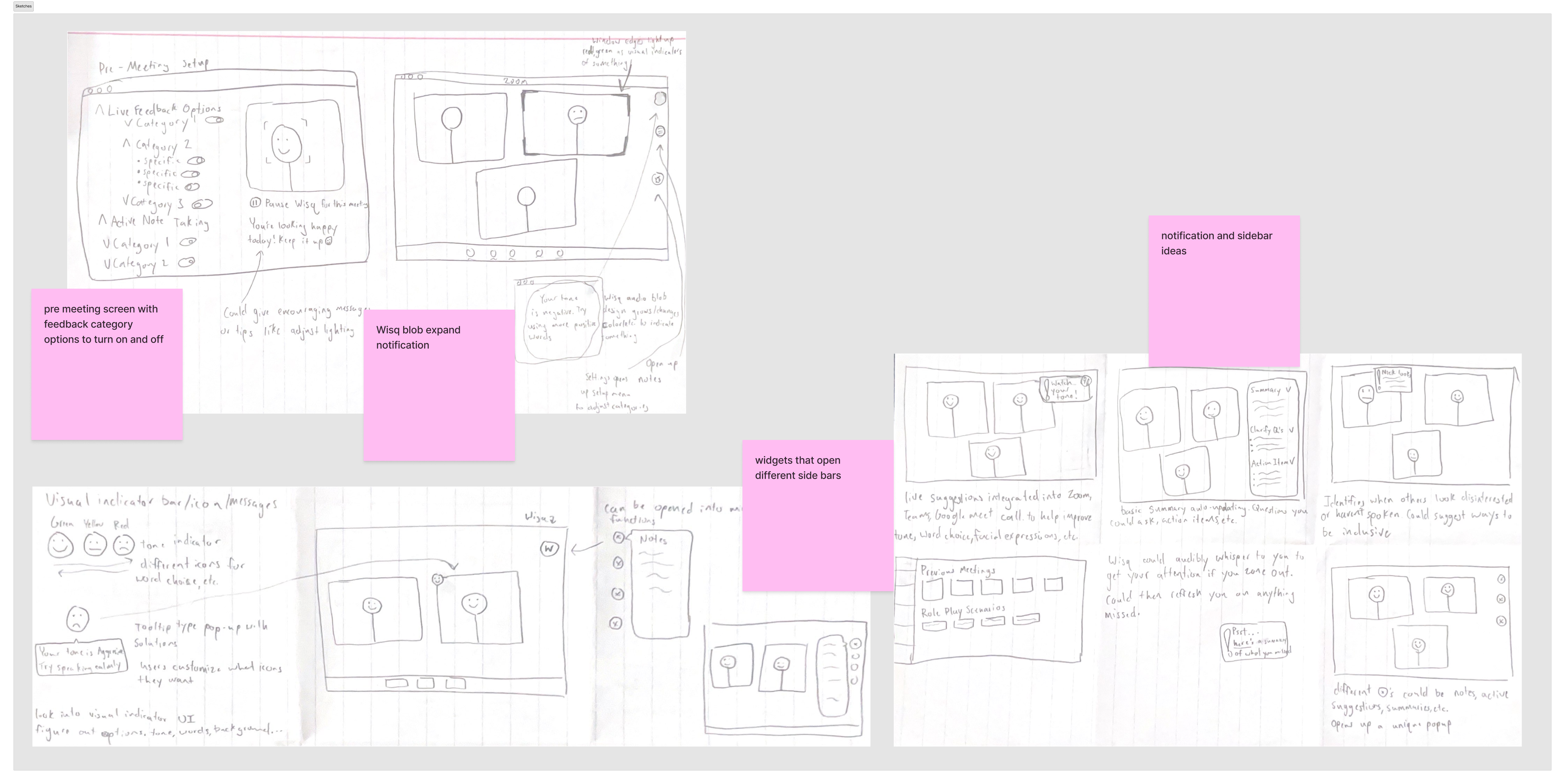
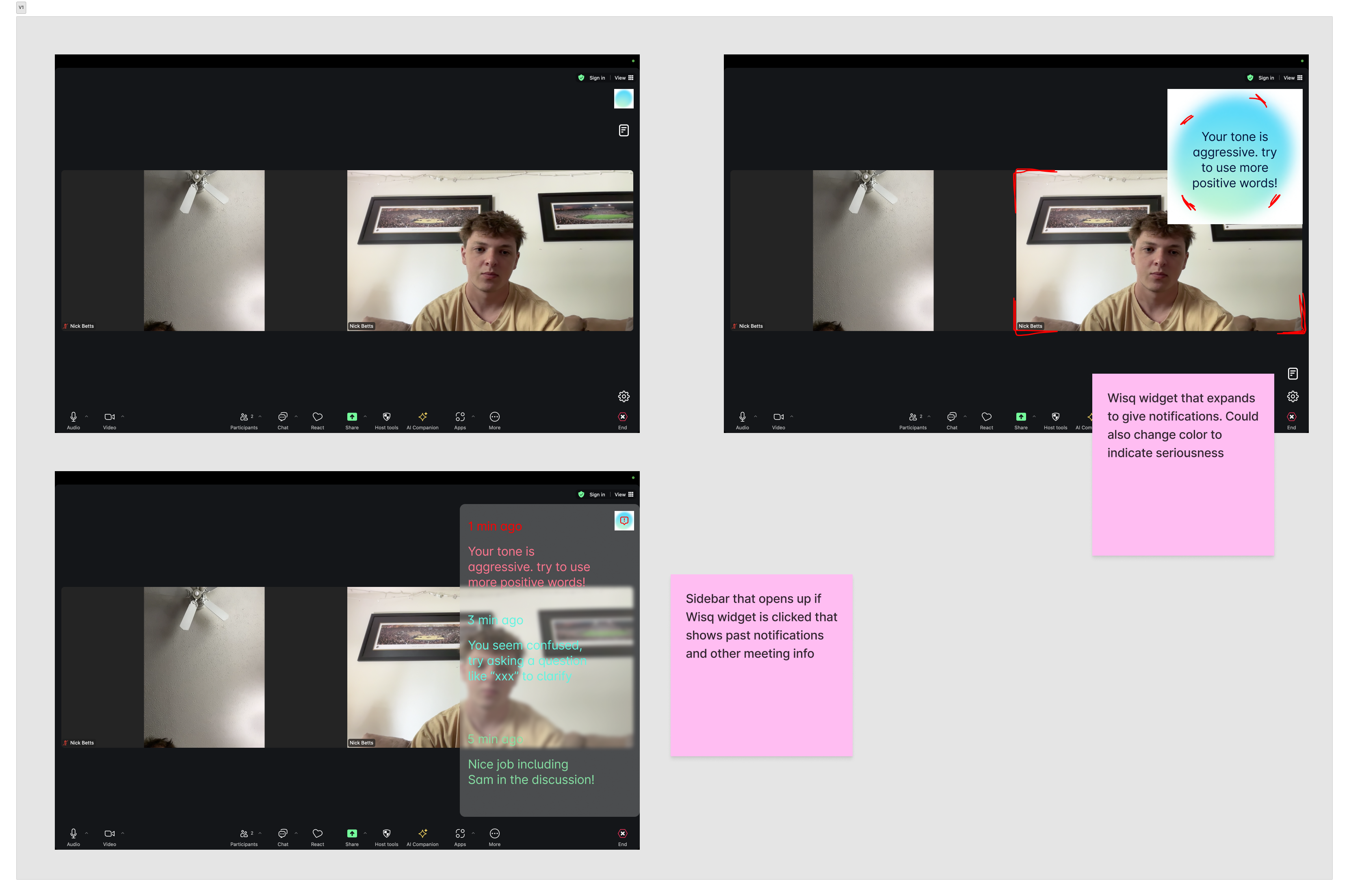
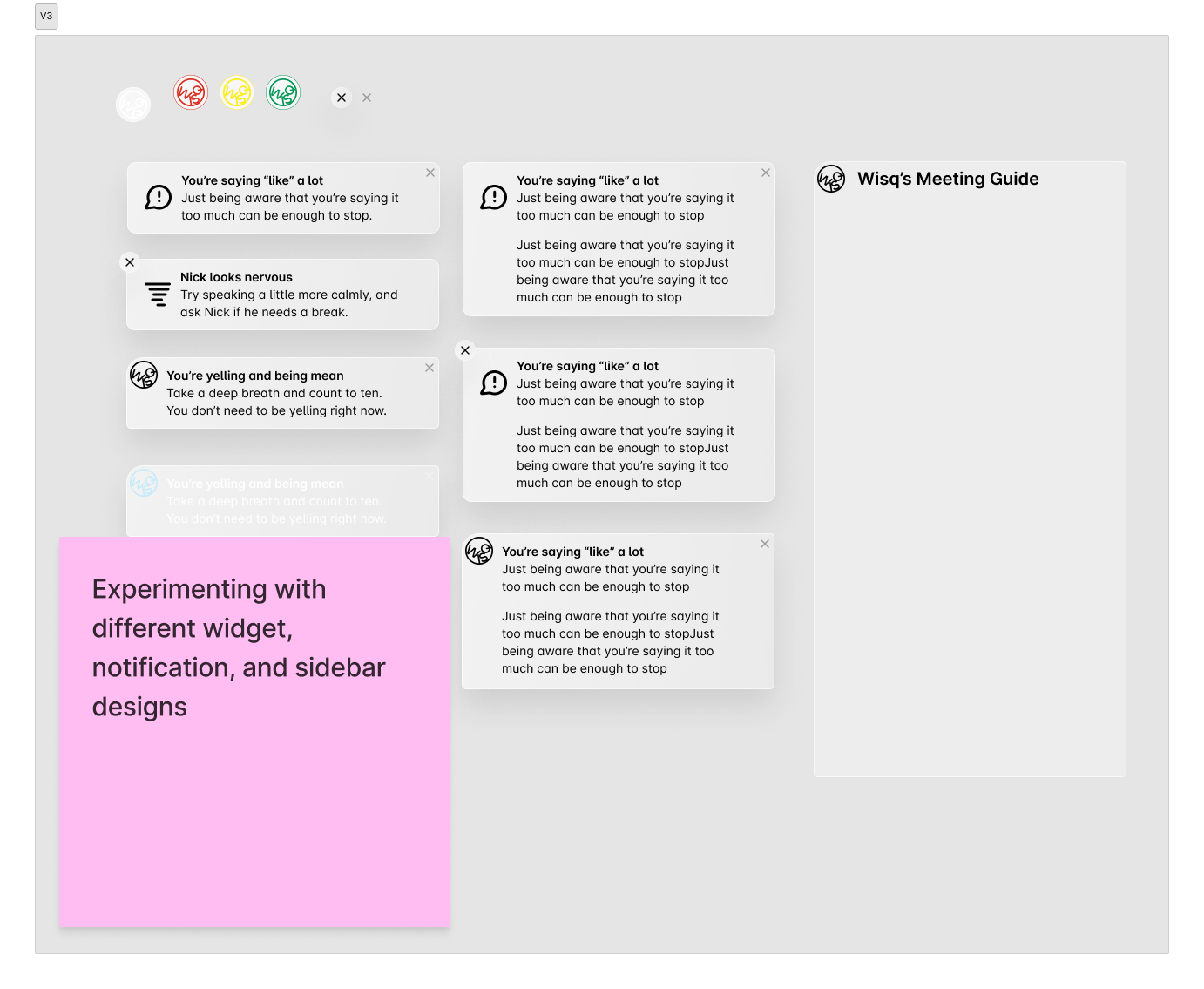
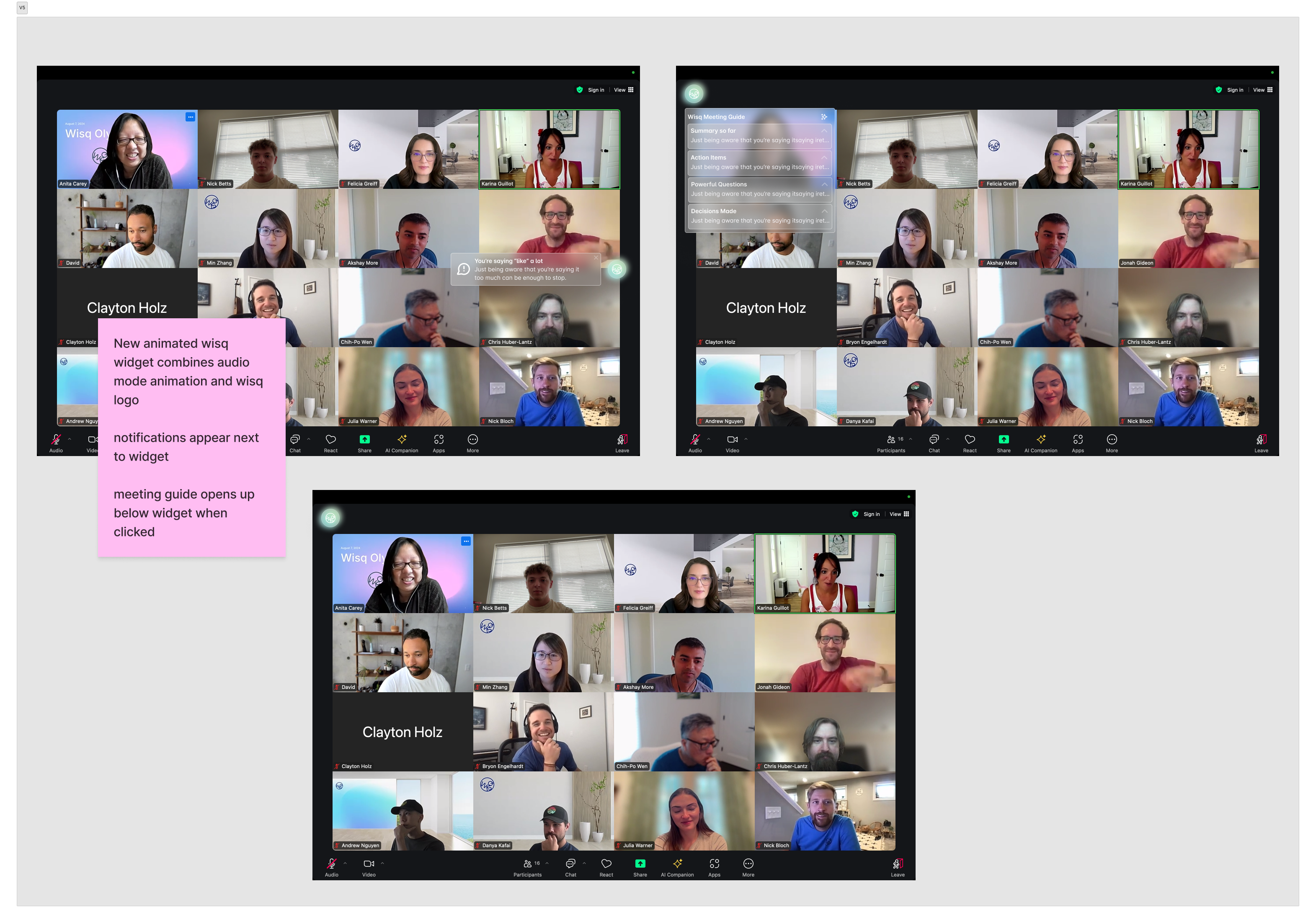
The key ideas I developed included a widget that overlays on the user's screen, compatible with any virtual meeting software. Notifications would pop out from the widget, which the user could place anywhere on their screen. Clicking the widget would open a menu displaying summaries, questions, and action items. I also experimented with having multiple widgets for different functions and explored various ways to display notifications.

Shaping the Solution

Goal

Transition sketches into Figma to further develop and refine them into a final solution.

Approach

I continued developing my ideas in Figma, incorporating feedback from the design team throughout the process until I was confident in the quality of my work, ready to present to stakeholders.

Takeaways

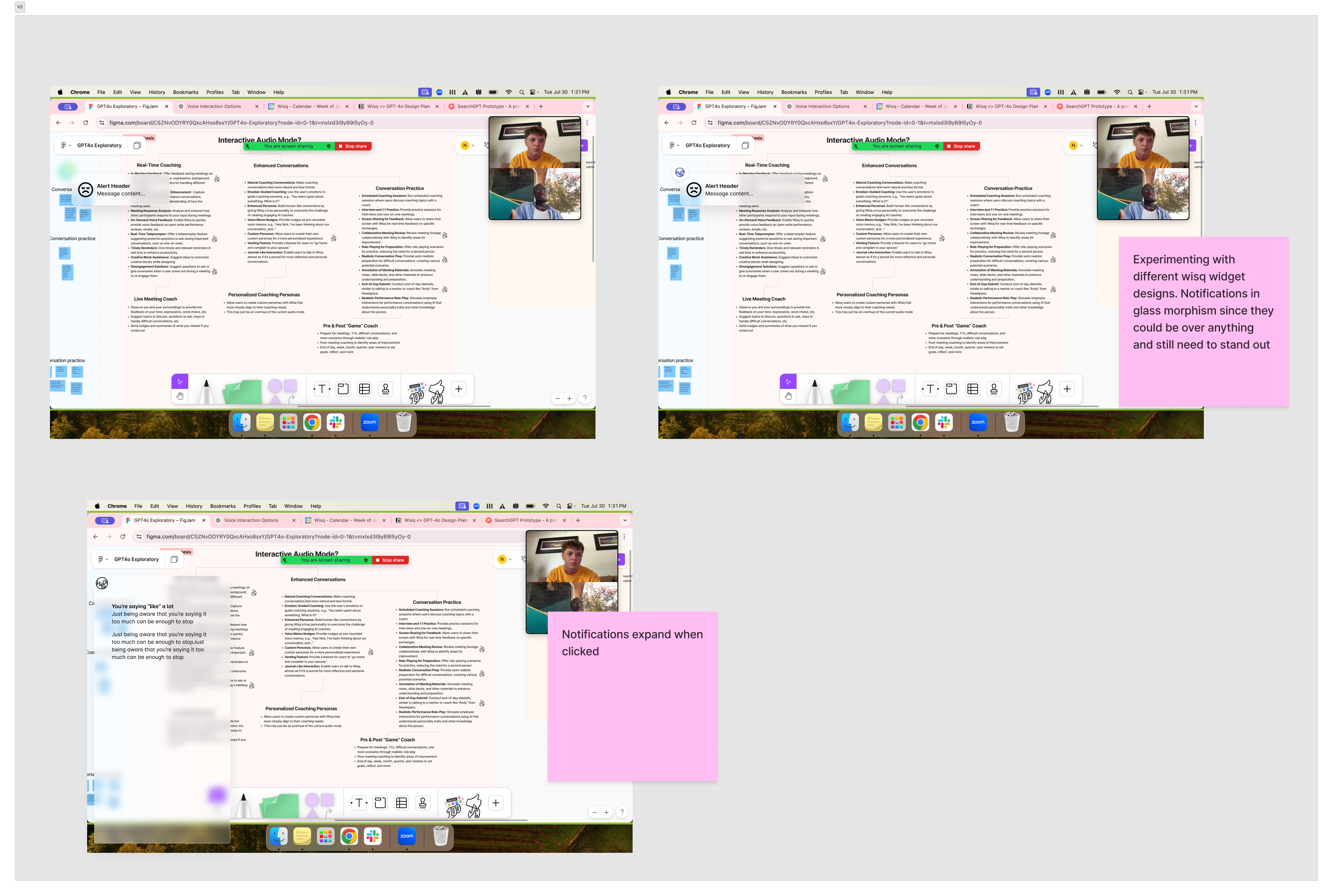
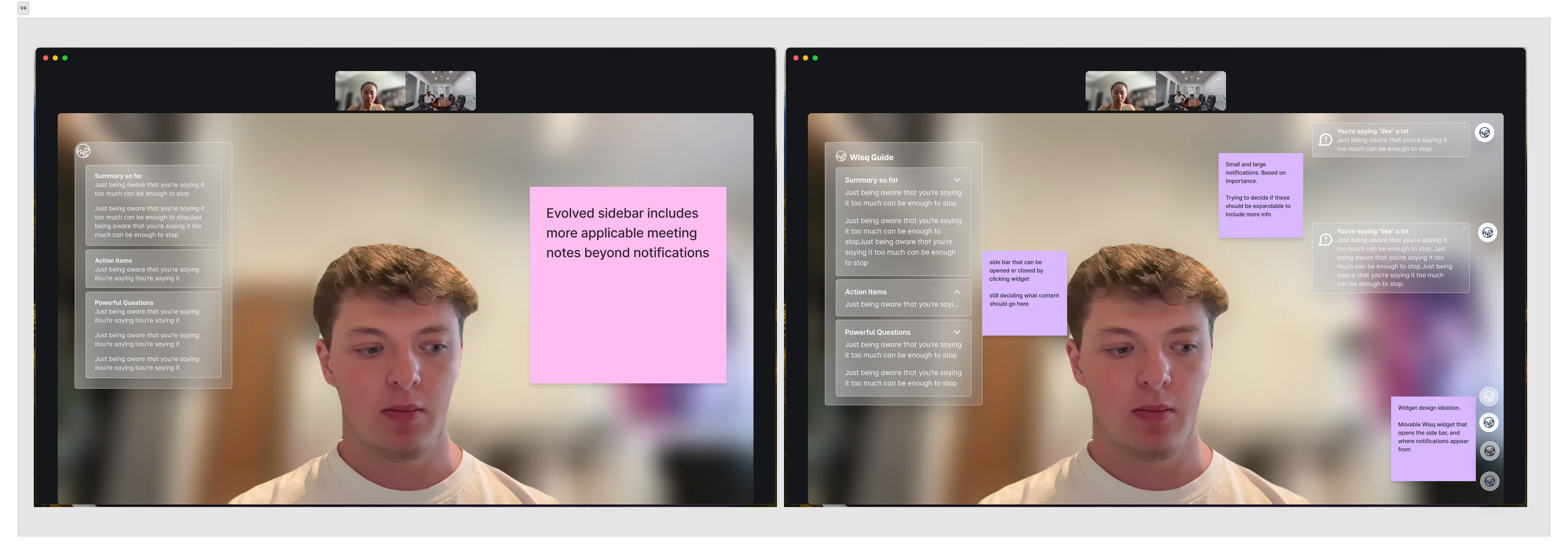
Throughout the design evolution, the key takeaways were: the Wisq widget would feature an animated blob derived from the current audio mode; notifications and the sidebar should adopt a glassmorphism style for visibility over any background; and the sidebar content should include powerful questions, meeting notes, and past notifications.

Goal

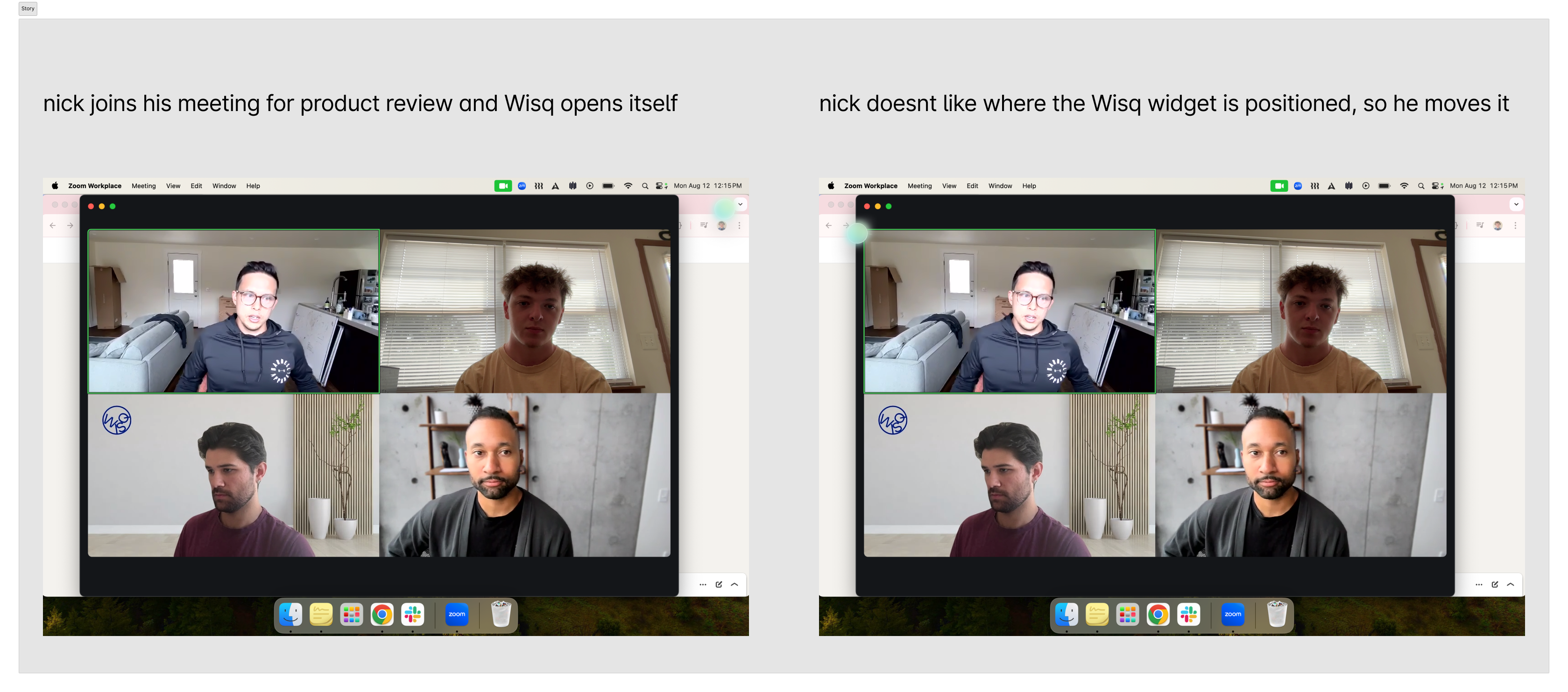
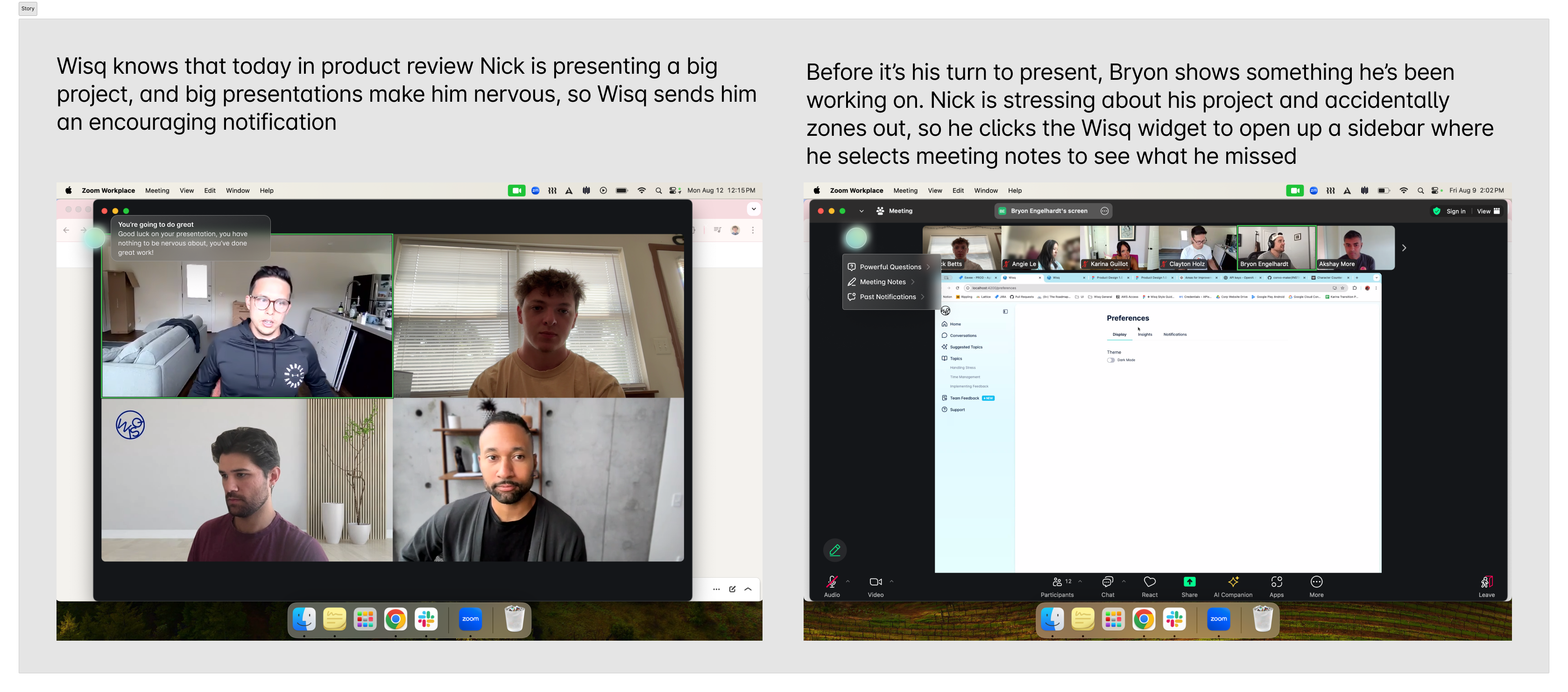
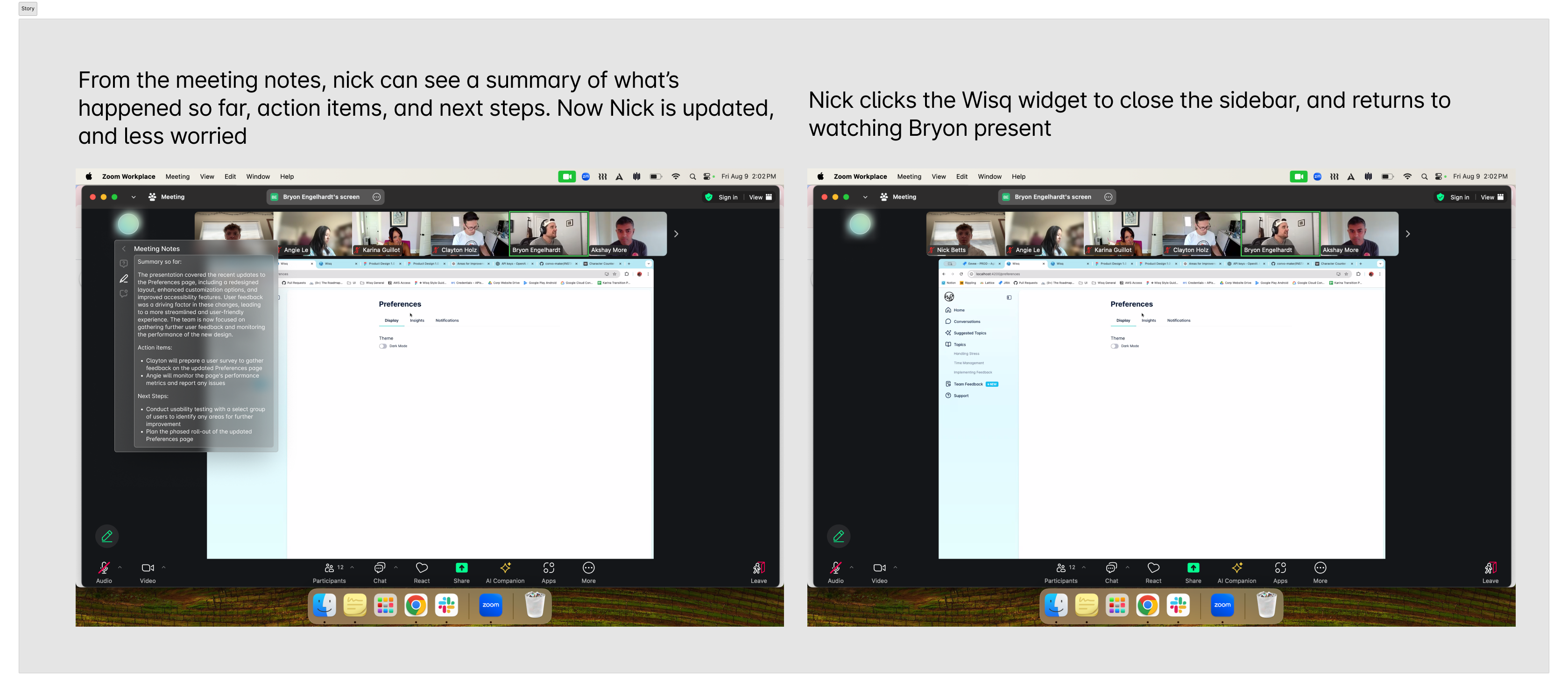
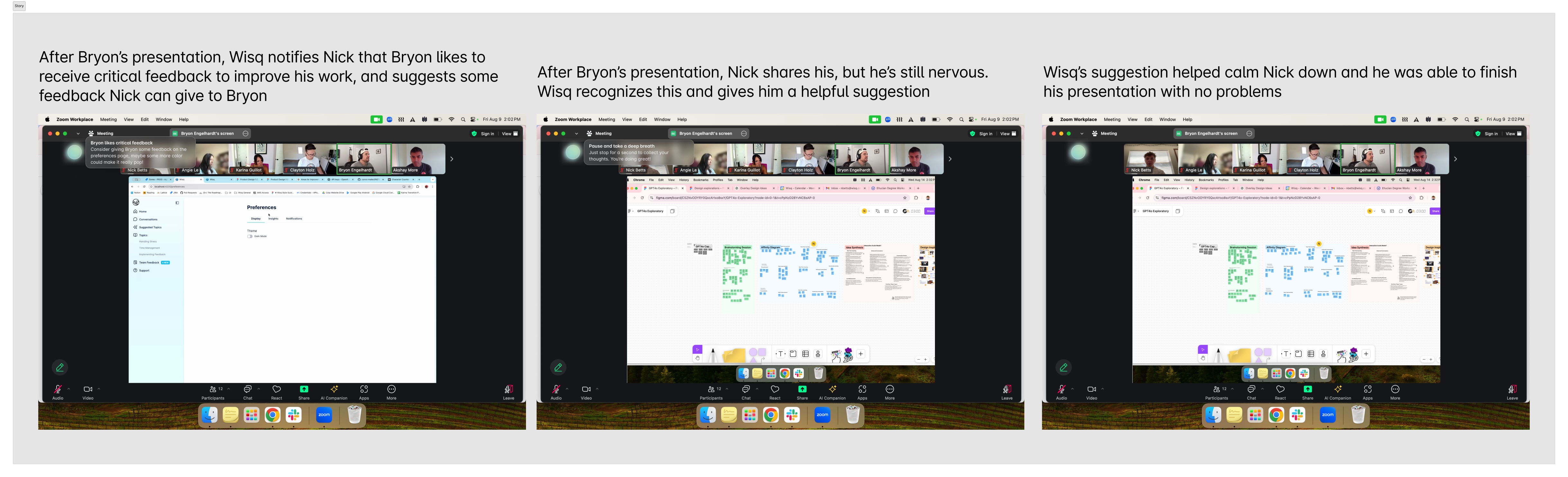
Illustrate how users would interact with and benefit from my designs and ideas through a user story.

Approach

I developed a scenario to present my final designs to everyone at the company, ensuring that the presentation was clear and accessible even to those without prior context on my work.

Takeaways

I found that creating a story to showcase my designs was extremely helpful in conveying their functionality to everyone. Additionally, I continued to refine the designs during this iteration, which I was pleased with.

Next Steps & Impact

finally get some ideas onto paper to start getting into the design phase of the project

What I Learned

This project taught me the importance of balancing innovation with practicality. By narrowing my focus and iterating based on real-time feedback, I was able to develop a tool that felt natural, engaging, and uniquely Wisq. More importantly, it created a meaningful, human-centered solution to some of the common pain points of virtual meetings—allowing people to focus on what really matters: connection and communication.

If you're still here...

Thanks for reading! I'd love to answer any questions or just chat about this project.